
Look
Seek taut skin without mold, punctures or sunken patches. Colour depends on the variety.


The Turkish pantry · Field guide 01
From the market stall
to the smoky heart of the table.
Silky when roasted, rich when fried, generous when stuffed. Get to know one of the most versatile ingredients in Turkish cooking.
Start at the market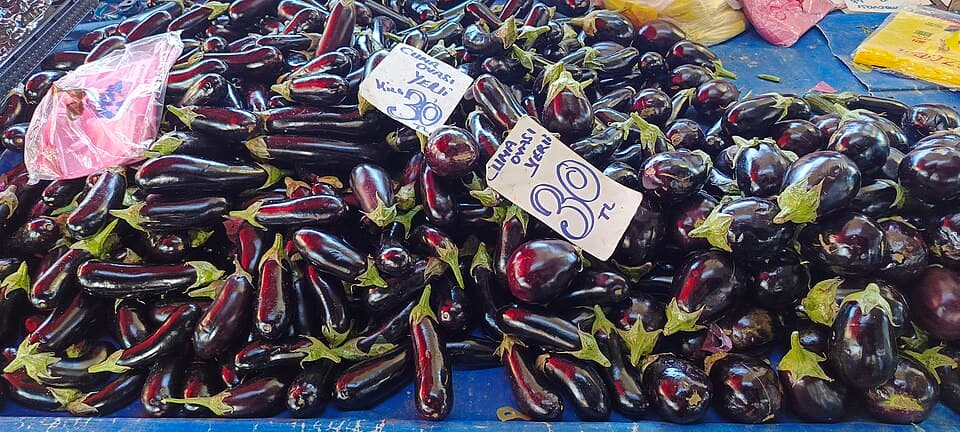
01 · Choose well
Choose the shape for the dish. Choose the individual eggplant for its condition.
Seek taut skin without mold, punctures or sunken patches. Colour depends on the variety.
Compare similar types. Look for firm fruit that feels substantial for its size, not soft or spongy.
What variety is it? Where was it grown? When was it picked? A local name needs more than a familiar shape.
02 · Know what you’re buying
Three photographic examples—not a complete catalogue, and not shown to a common scale.
A local market name is a starting point. Ask the seller about the variety and where it was grown; shape alone cannot establish its origin.
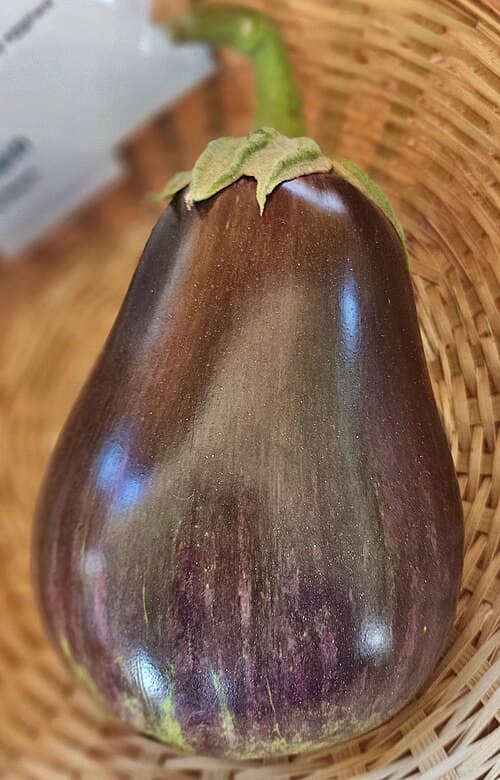
A substantial body gives you wide slices or plenty of flesh for roasting. Match the size to your dish rather than assuming bigger means bitter.
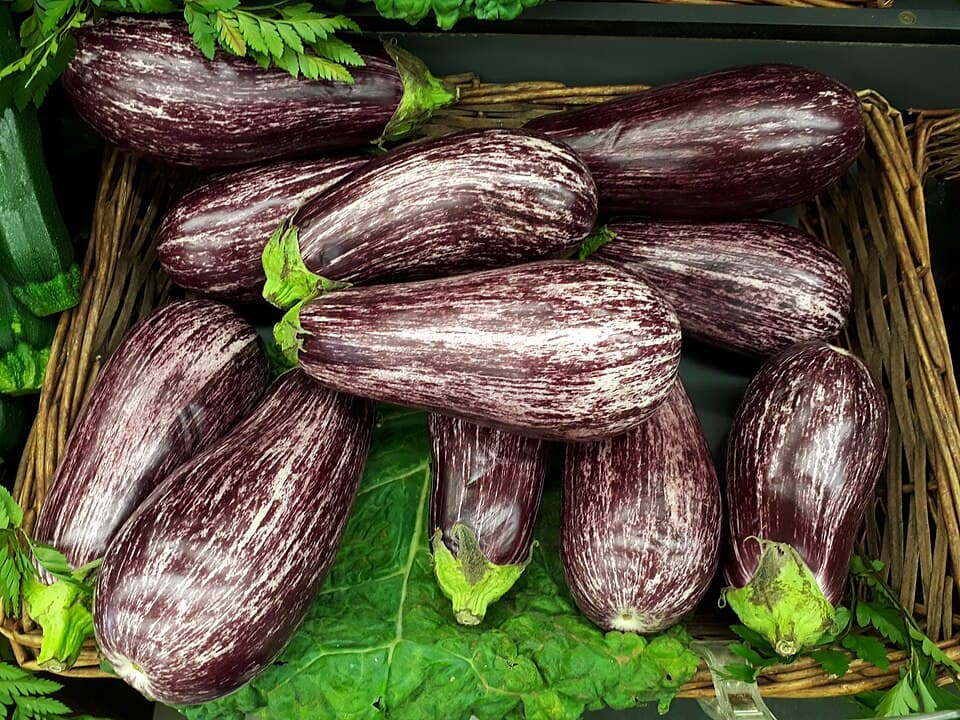
A named cultivar with purple-and-cream skin. A shop label saying “striped” does not necessarily identify this variety. The pattern may change during cooking.
Kemer commonly describes long, dark-purple forms; bostan commonly describes broader, rounder ones. Birecik patlıcanı is a place-associated product. These photographs are not relabelled as varieties their sources do not verify.
03 · In your kitchen
For salads and purées
Cook until the flesh yields completely. Drain excess liquid, then chop for texture or mash for a smoother result.
For a smoky character
A suitable grill or direct flame chars the skin as the flesh softens. Oven-roasting alone will not give the same smoke.
For a richer bite
Follow the dish’s preparation and cut size. Check the centre is tender; browned edges alone do not mean it is cooked.
Swapping varieties? Work by weight and piece size. Four small eggplants are not interchangeable with four large globes.
04 · Beyond the recipe
A place can shape a dish without owning every version of it.
Yogurt brings tang and creaminess; tahini adds sesame richness; olive oil and lemon leave the vegetable more distinct. These are families of preparations, not rigid city boundaries.
The Antalya preparation documented in the original guide combines roasted eggplant with tahini, walnuts, lemon, garlic and olive oil, with yogurt optional. Hatay’s documented babagannuş and mutebbel are different preparations, even when international menus use their names differently.
Eggplant’s domestication history lies in Asia. Its later place in Ottoman and Turkish cooking is a different story: stuffed vegetables, meat dishes, fried preparations and soft purées. A colourful story about a dish’s name is not proof of its invention.
The original guide distinguishes botanical research from culinary interpretation and links the underlying sources.
İmam bayıldı and karnıyarık explore whole stuffed eggplant. Hünkar beğendi makes soft cooked flesh the foundation of a dish. Şakşuka takes you into fried vegetables; babagannuş into roasted ones.
These are suggestions for exploration, not claims that every recipe is already in our collection.
05 · Keep it at its best
Keep eggplants unwashed until use and protect them from bruising. A refrigerator crisper is a practical short-term home option; aim to use them within about a week, sooner if they begin to soften or wrinkle.
Commercial storage guidance uses warmer conditions than a normal home refrigerator. Do not change your refrigerator temperature for eggplants.
Outdoor harvests and greenhouse production mean availability varies. Ask where the batch came from rather than treating year-round sales as a local harvest calendar.
Keep exploring
Explore the current collection, or look for published recipes mentioning eggplant.
This first design page is adapted from our full eggplant field guide, which includes the botanical, market, regional and storage references supporting this material. It is a shorter reading experience, not new historical research.
Photographs retain their individual source and licence links above. Images are proportionally resized and displayed without cropping or colour edits. No image is used as evidence of kitchen testing.
Design review edition · September 2026

